
DeviiNews9 min read
Red Dead Redemption 2: fan projects are finally opening Mexico on the map
Nuevo Paraíso and other RDR2 mod efforts are turning the visible-but-empty south into towns, NPC routines, and a playable border frontier years after launch.
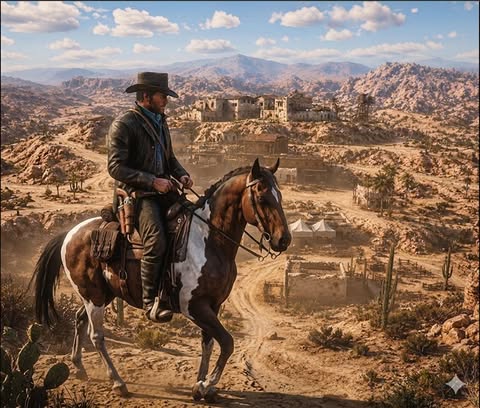
Red Dead Redemption 2 shipped with a map that teases more country south of the border than players can actually ride through. For years that unfinished stretch felt like a locked door on an otherwise enormous frontier. Now fan teams are treating it like a building site: filling towns, scripting NPC routines, and stitching together a Mexico that finally matches the promise baked into Rockstar’s terrain.
What was already on the disc
Vanilla RDR2 lets you glimpse Nuevo Paraíso from the edges of New Austin. You can see adobe roofs, dusty roads, and mountain silhouettes, but the playable space stops well short of a full southern chapter. Rockstar clearly invested in geography and atmosphere; the missing piece is density—settlements with schedules, side content, and the kind of systemic life that makes Lemoyne or New Hanover feel inhabited.
That gap is not a small cosmetic hole. It is an entire tonal region: border tension, different architecture, Spanish-language signage, and story beats that the first Red Dead Redemption already explored. Players who remember Marston’s Mexico trip have been asking why the sequel’s map whispers about the same place without letting them camp there.
Why Nuevo Paraíso became the banner project
Among the mod efforts gaining attention, Nuevo Paraíso is the name most often attached to the push south. The goal is not a texture swap but a sustained world-build: reconstructed towns, interior spaces, ambient crowds, outlaw camps, and environmental storytelling that reads like Rockstar-authored content even when it is not.
Early previews and work-in-progress clips show cobbled plazas, market stalls, and ridgeline vistas that finally reward players who spent hours trying to glitch past invisible walls. The hype is less about a single trick and more about scope—treating Mexico as a second game inside the first.
What modders are actually adding
Reports from testers and showcase videos point to a consistent checklist:
Settlements with purpose: streets that connect to missions and ambient events instead of empty facades.
NPC loops: shopkeepers, laborers, and travelers with believable day-night rhythms.
Hidden camps and landmarks: rewards for riders who leave the main road.
Environmental passes: lighting, foliage, and clutter tuned so the region no longer looks like a greybox extension.
Each item sounds straightforward on paper. In practice it is thousands of hours of modeling, scripting, and QA on a codebase Rockstar never documented for the public.
Why the community keeps showing up years later
Most live-service maps age out of conversation within a season. Red Dead Redemption 2 is different because its simulation still sells the fantasy: weather that matters, horses with opinions, and NPCs who react when you greet them wrong. That fidelity makes new geography feel worth the effort—players are not modding a hollow sandbox, they are extending a world that already reacts like a western simulator.
There is also a cultural loop. Clips travel fast when someone rides into a rebuilt pueblo at sunset and the lighting matches the base game. Streamers rediscover the project, comment threads refill with “is this official?” questions, and another wave of volunteers files in to help with props or voice lines.
Rockstar built the canvas; fans are painting the border
None of this replaces publisher support. These maps are unofficial, PC-first experiments that can break after patches and may conflict with online terms of service if you load them in the wrong client. Treat every download as beta software: back up saves, read install notes, and expect rough edges.
Still, the direction is clear. A studio can ship an all-time open world and leave a frontier half-sketched, and players will spend years finishing the sketch anyway—not because the base game failed, but because it was convincing enough to invite the next chapter.
If you only try one thing after reading this, boot the latest public build of a Mexico project on a test save, ride in at dusk, and compare the silence of vanilla New Austin’s border to a town that finally has voices. The difference is the whole story.